Twenty-one horses
2025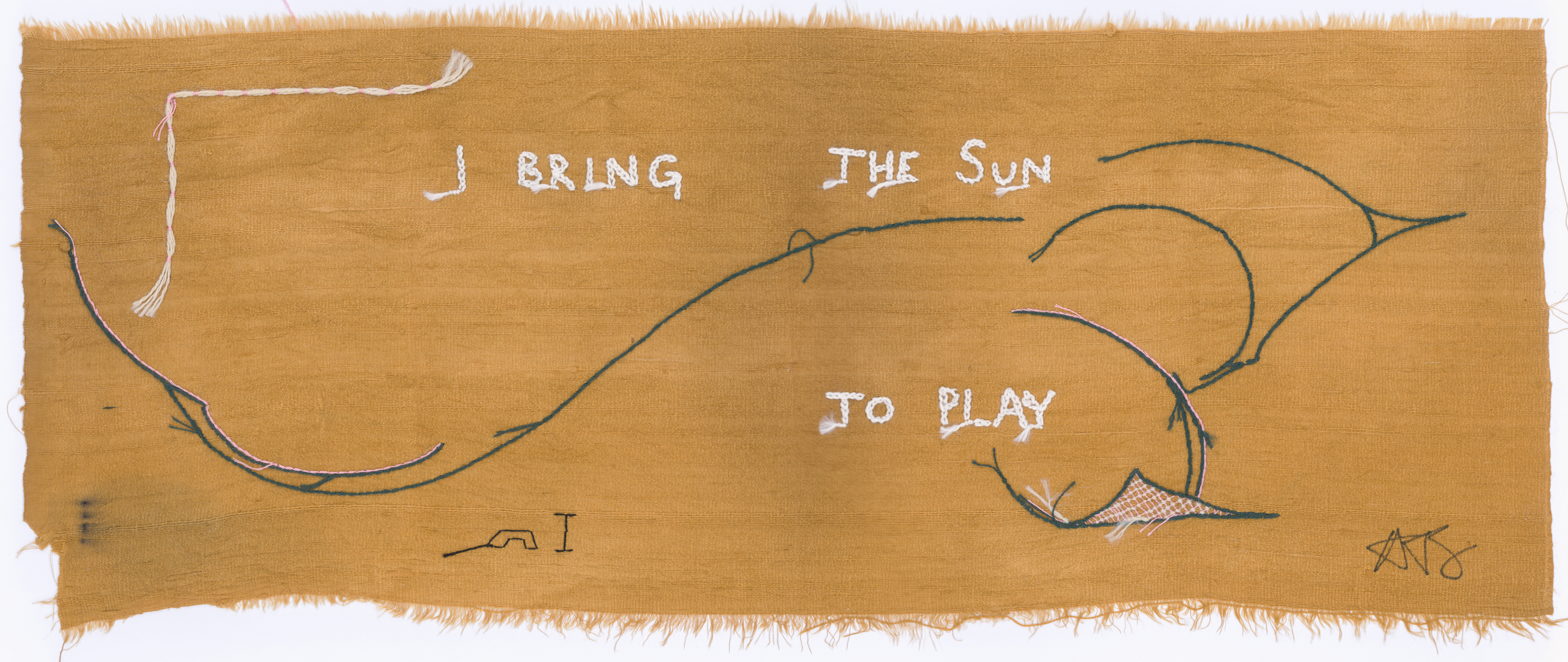
• Horse I: I bring the sun to play
(480 x 185)

• Horse II: Punch some holes in the paper
(430 x 250)
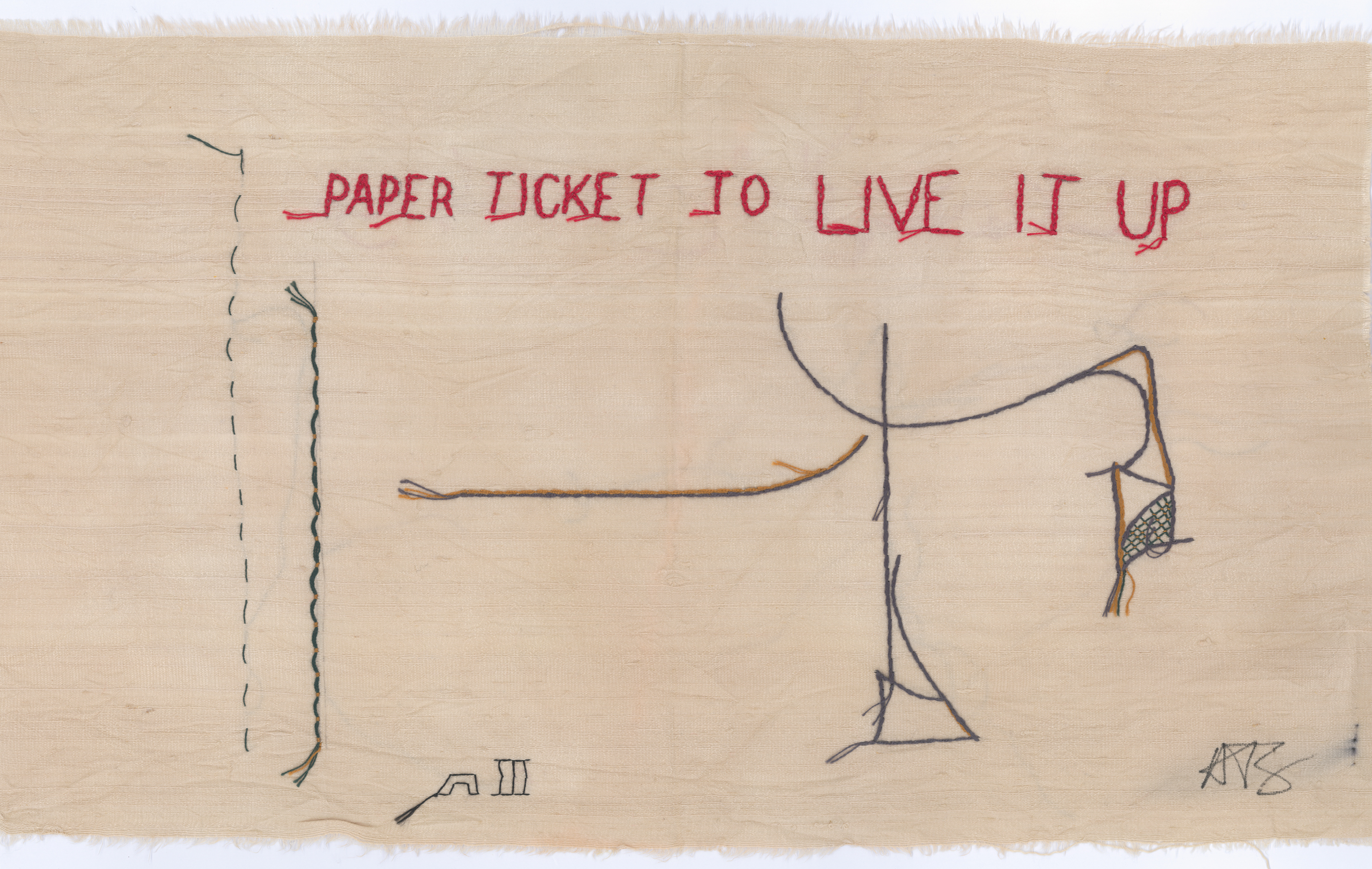
• Horse III: Paper ticket to live it up
(430 x 250)
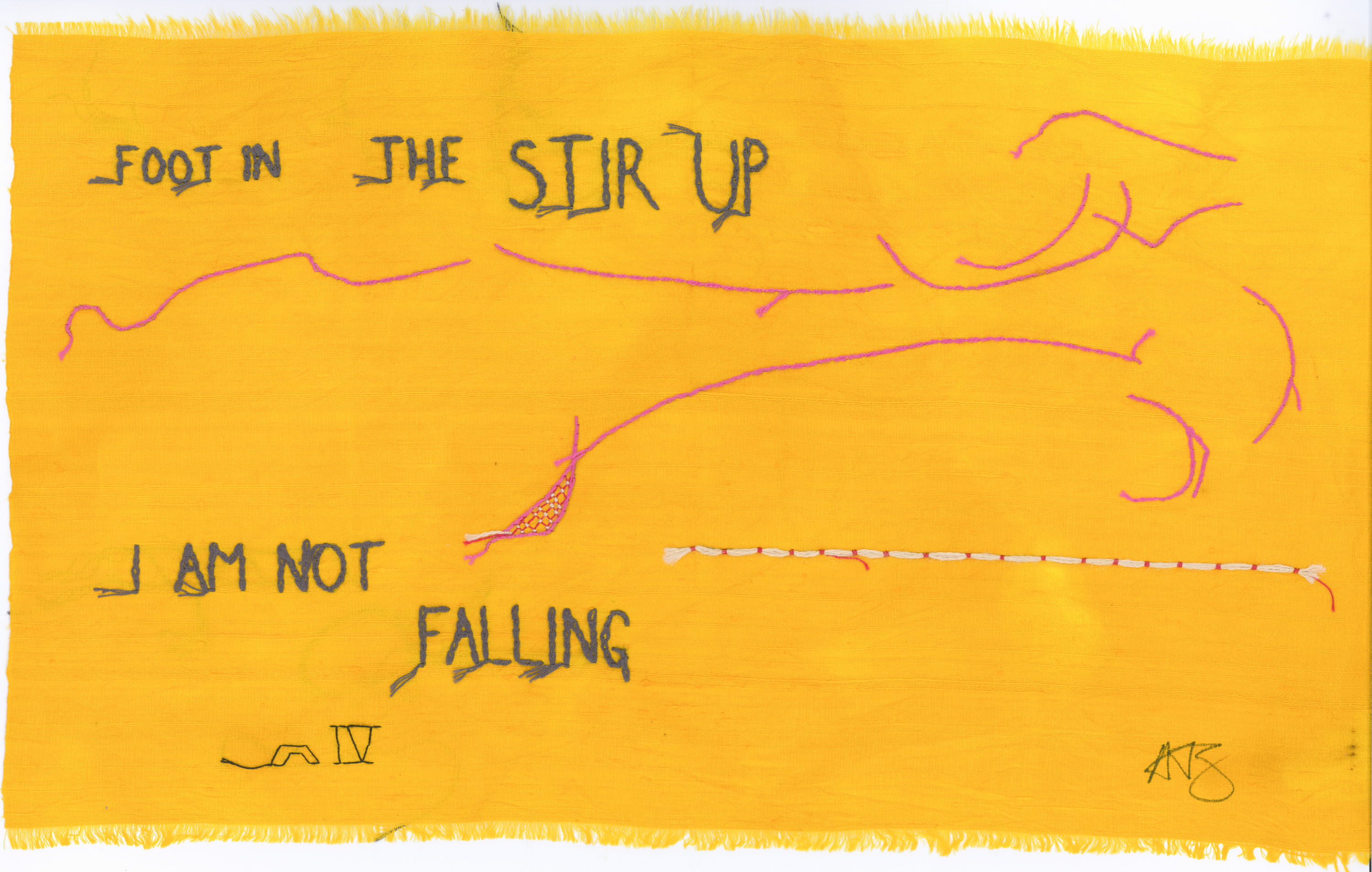
• Horse IV: Foot in the stir up, I am not falling
(425 x 250)
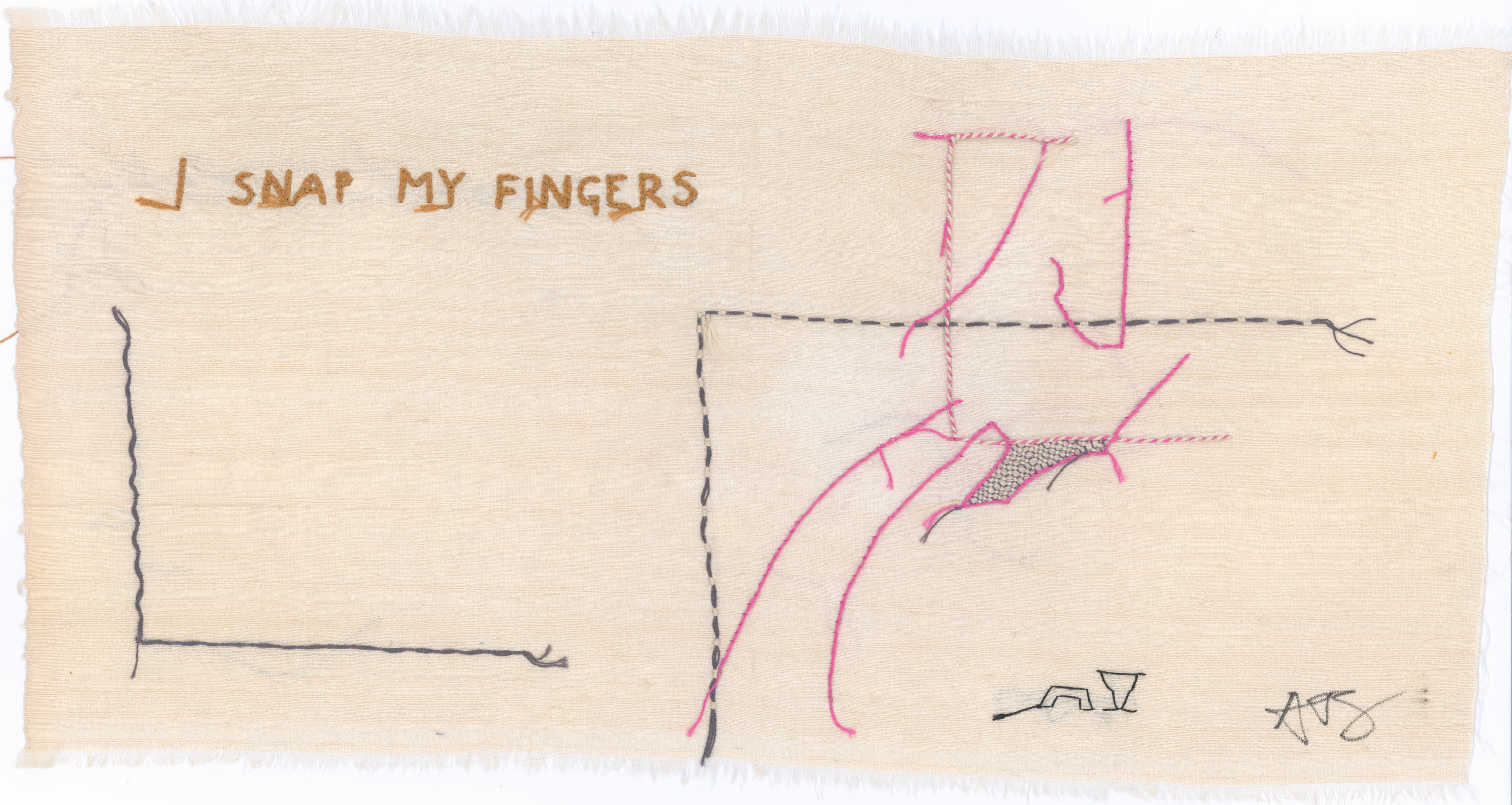
• Horse V: I snap my fingers
(415 x 210)
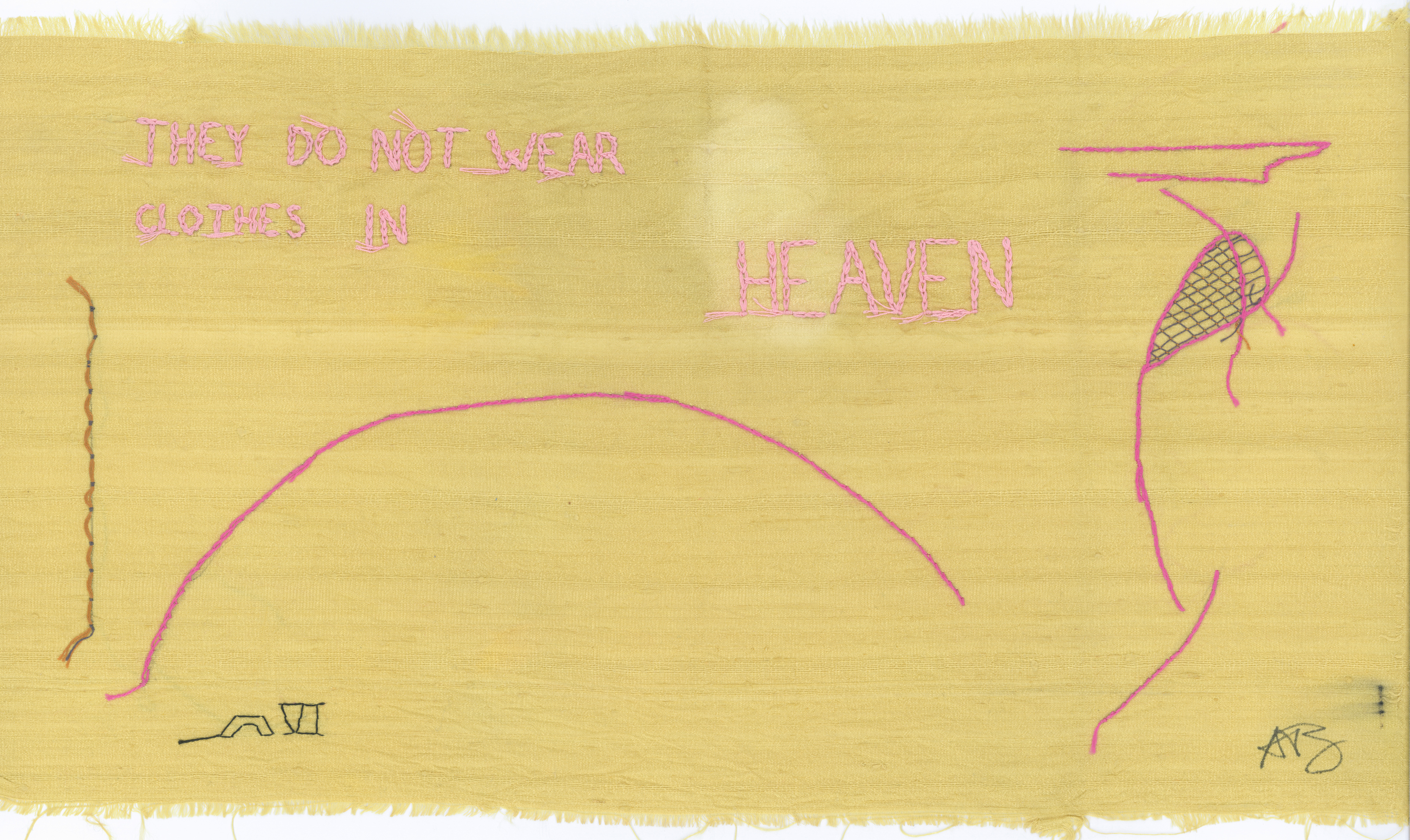
• Horse VI: They do not wear clothes in heaven
(430 x 240)
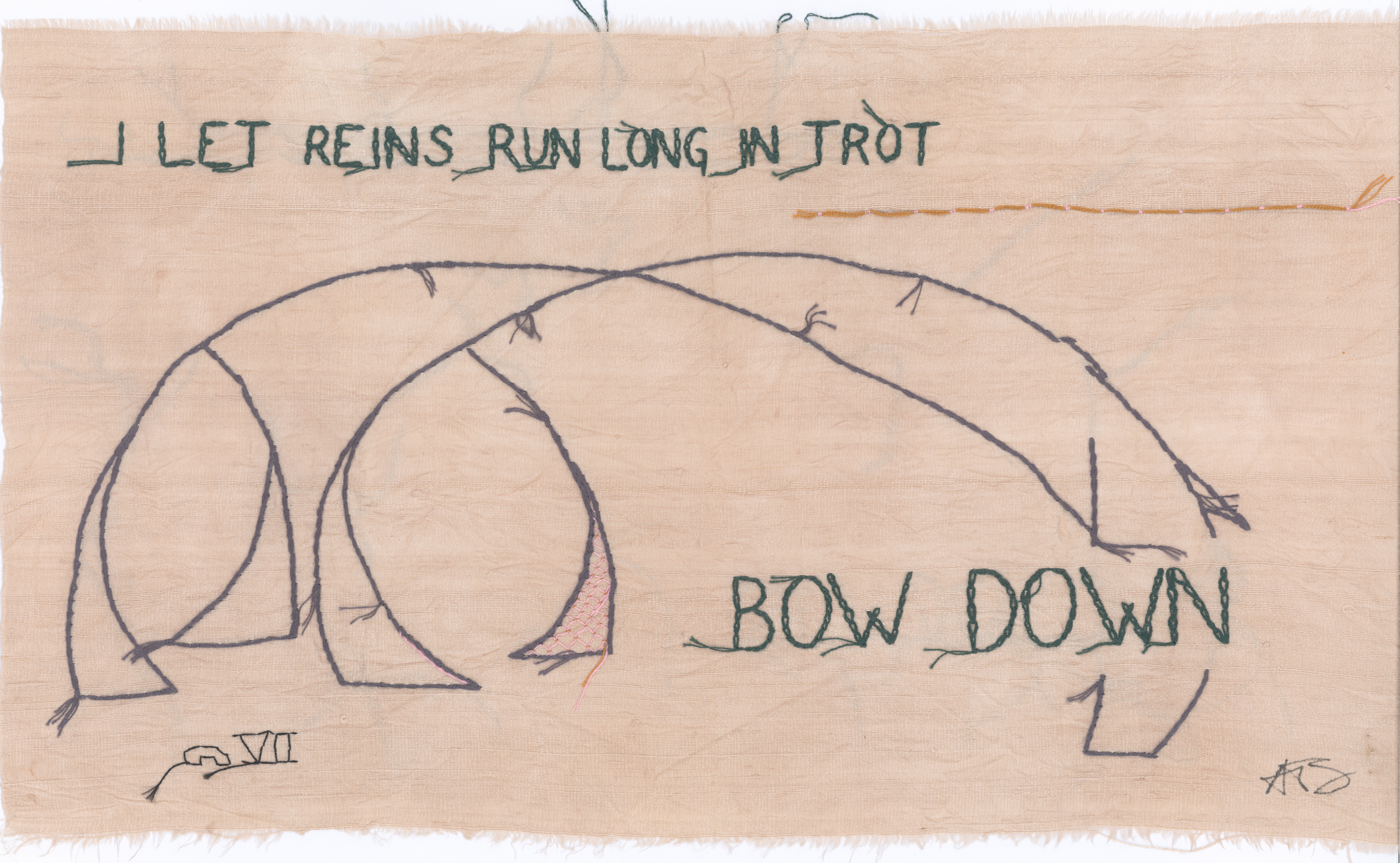
• Horse VII: I let reins run long in trot, bow down
(430 x 250)

• Horse VIII: Easy wind grit to fly over
(430 x 250)
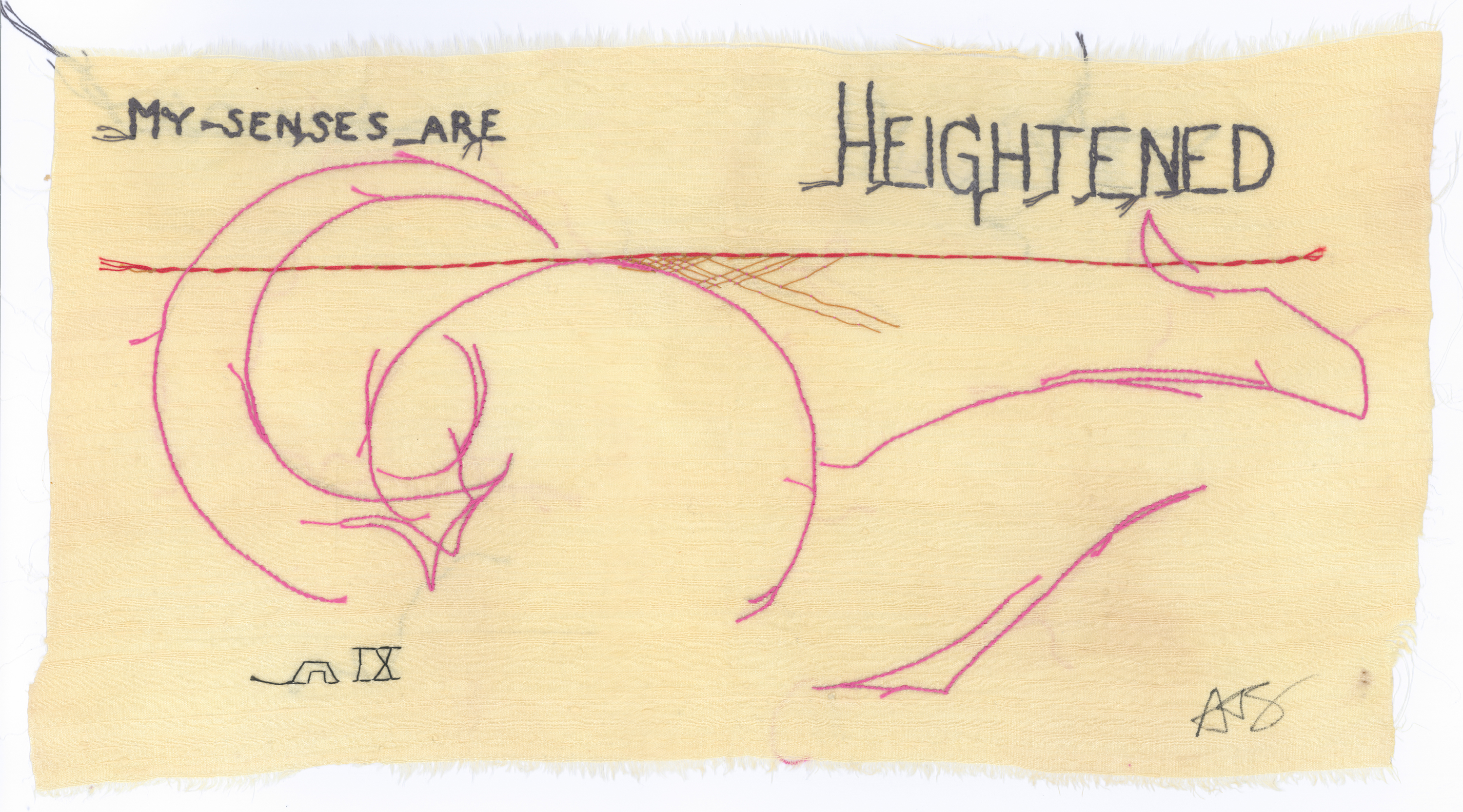
• Horse IX: My senses are heightened
(470 x 250)
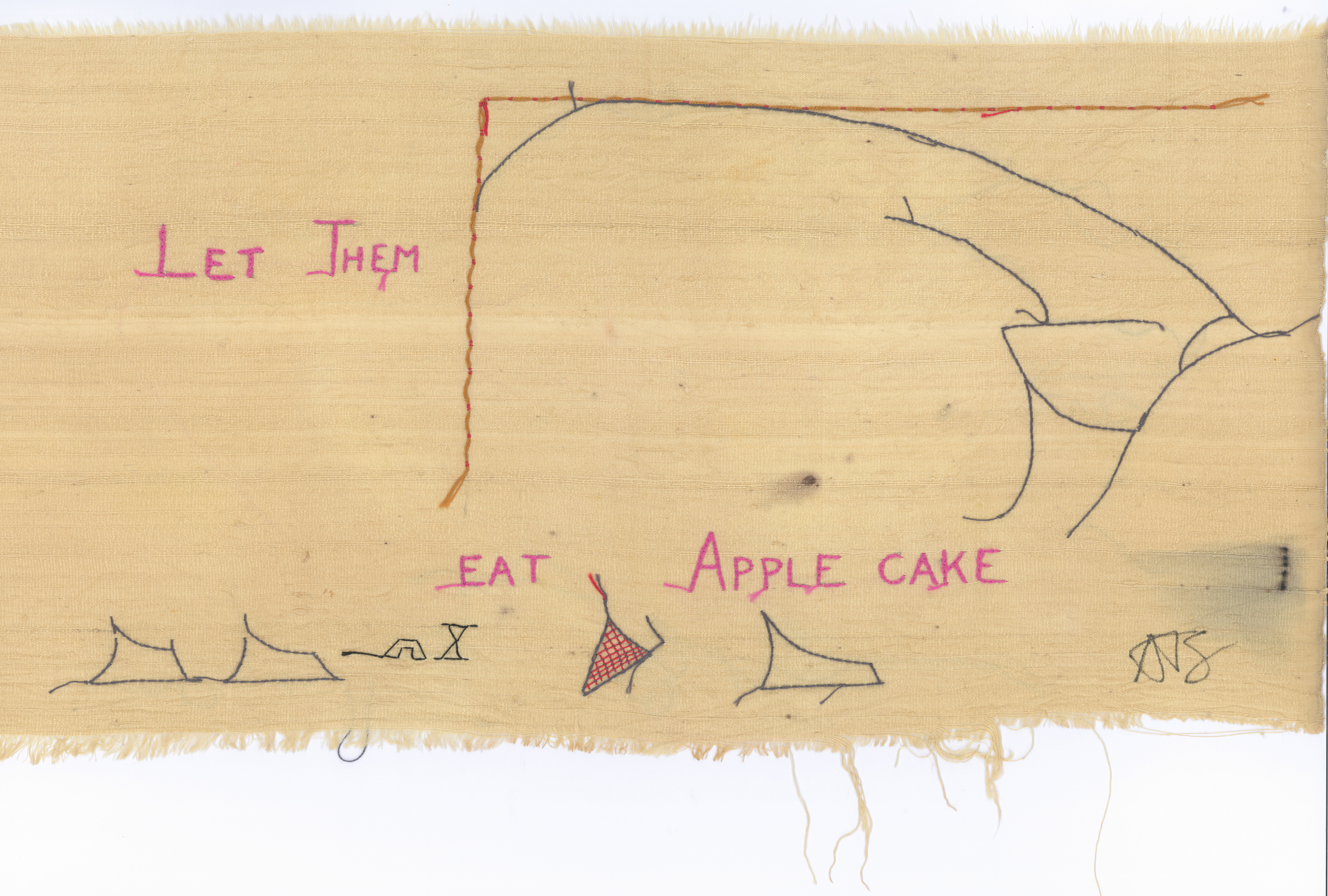
• Horse X: Let them eat apple cake
(430 x 235)
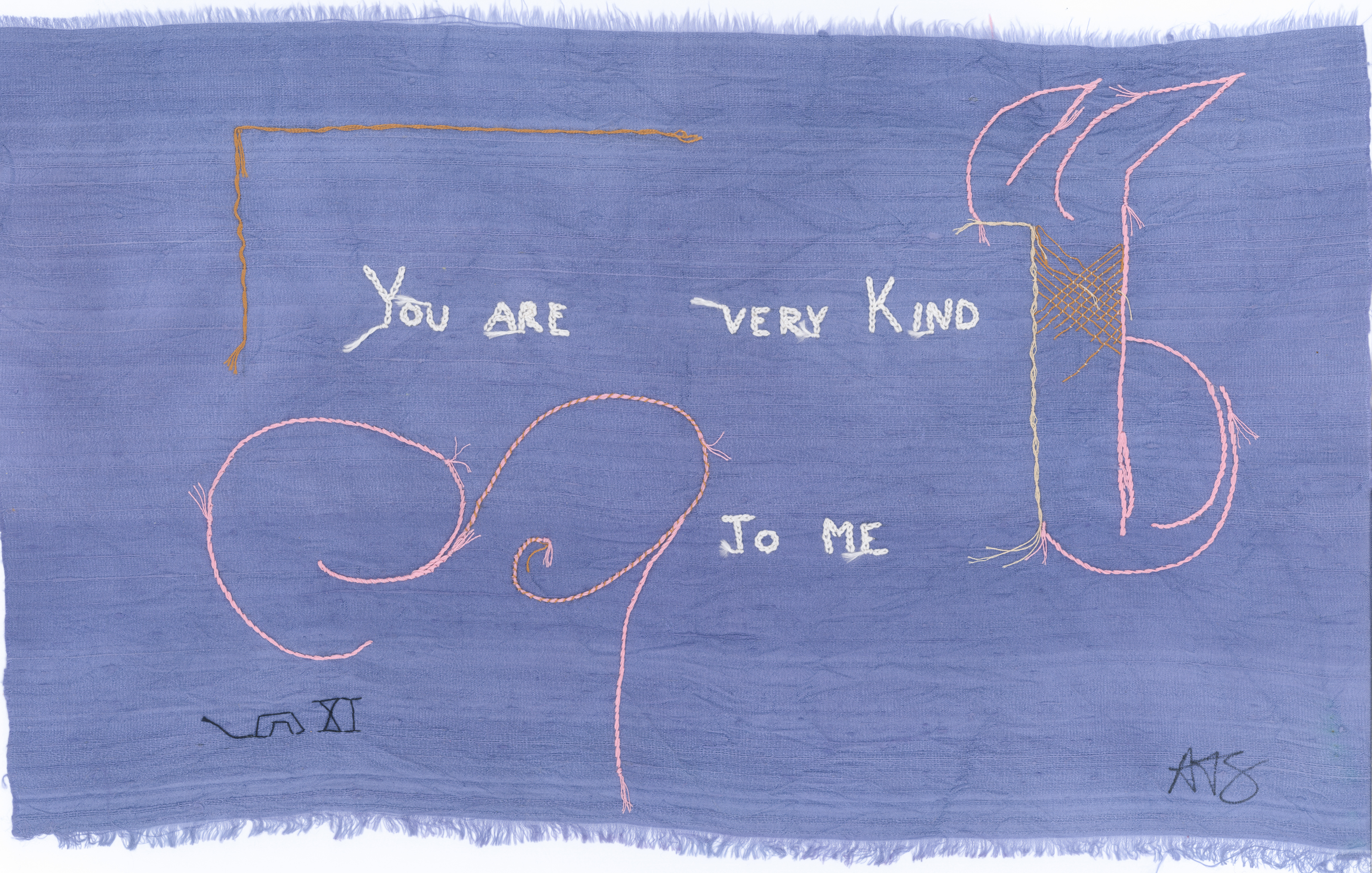
• Horse XI: You are very kind to me
(430 x 265)
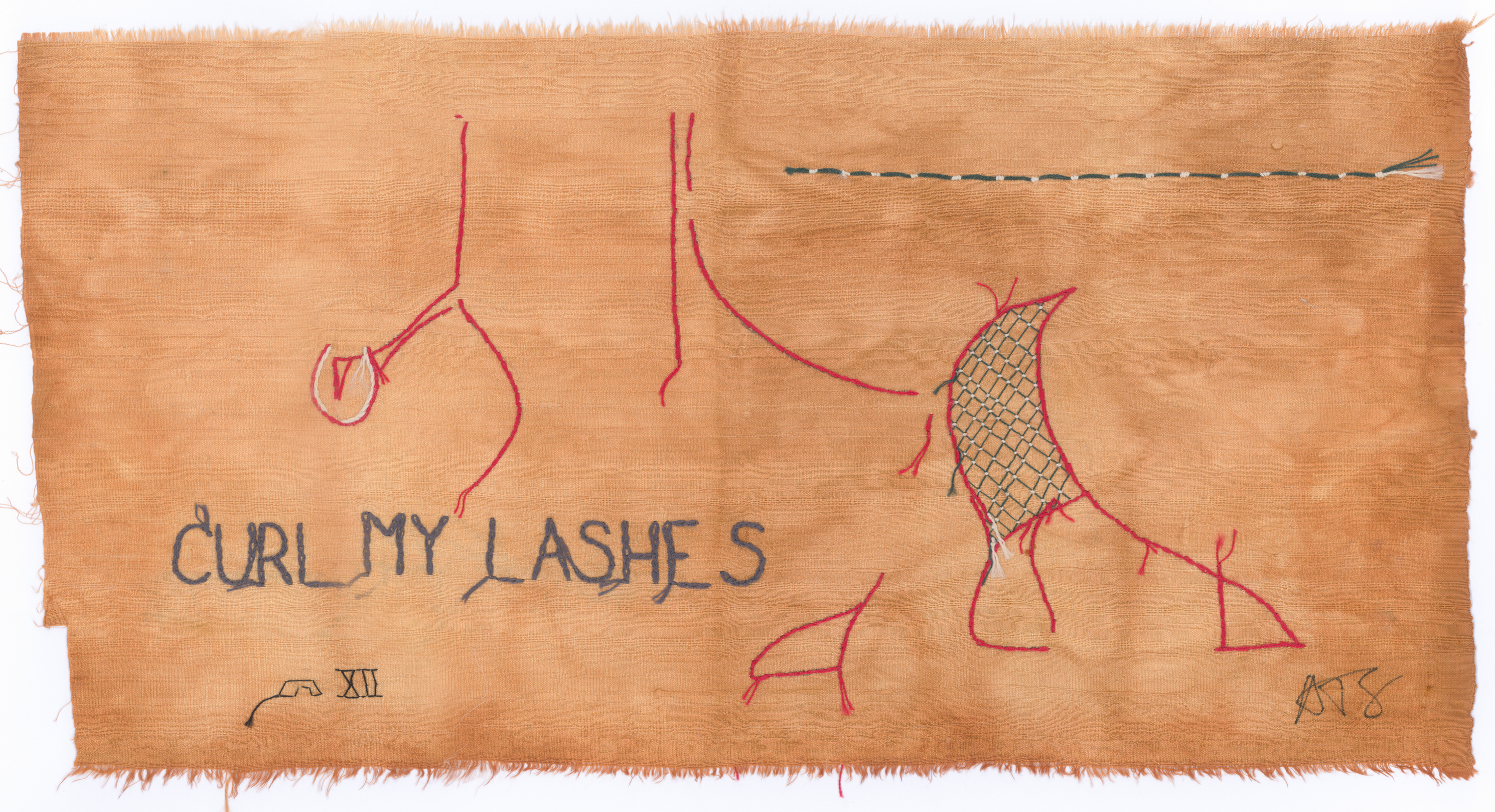
• Horse XII: Curl my lashes
(475 x 240)
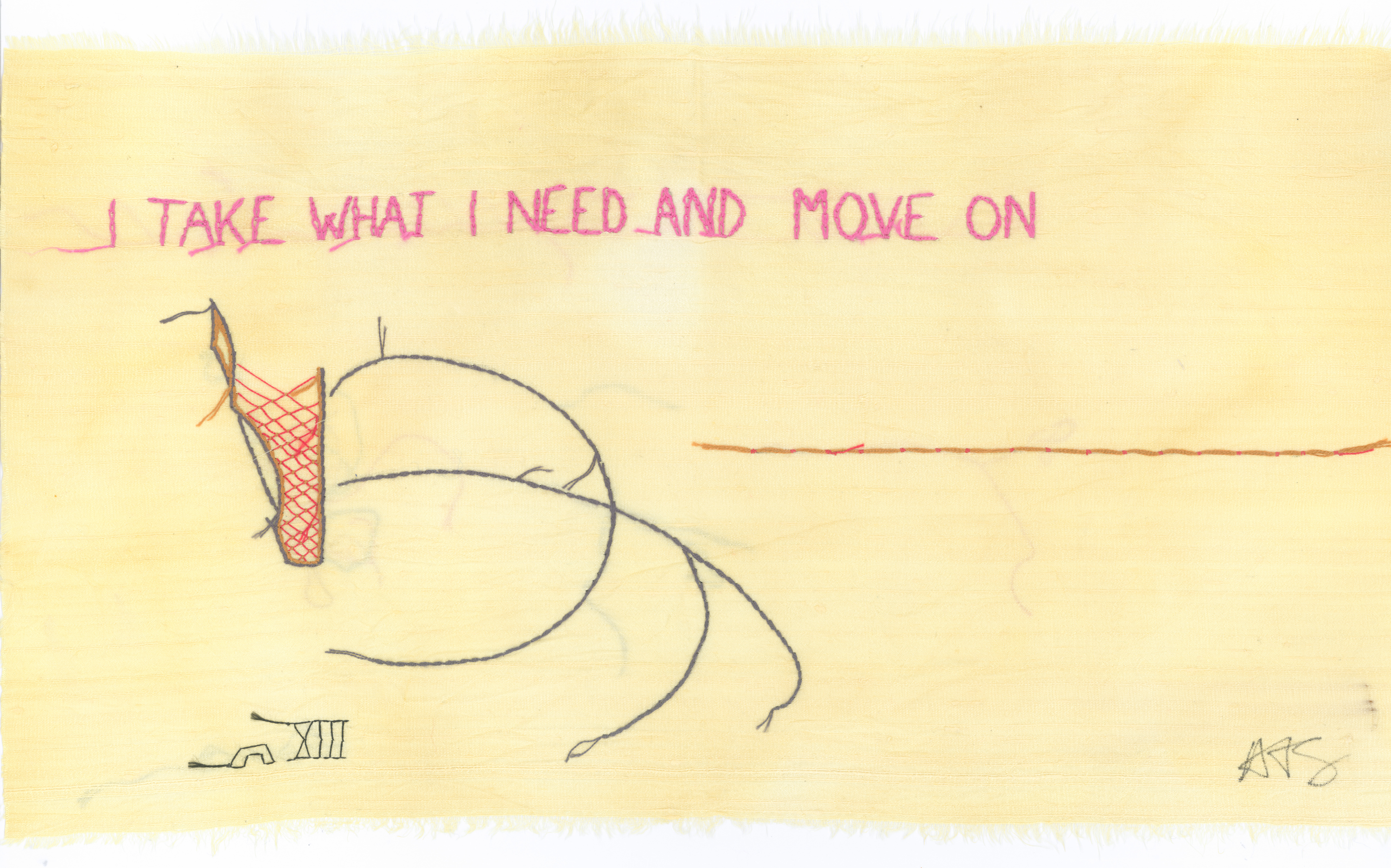
• Horse XIII: I take what I need and move on
(430 x 245)

• Horse XIV: I ride on top, canter through the river
(470 x 245)

• Horse XV: Let the known be named
(430 x 245)
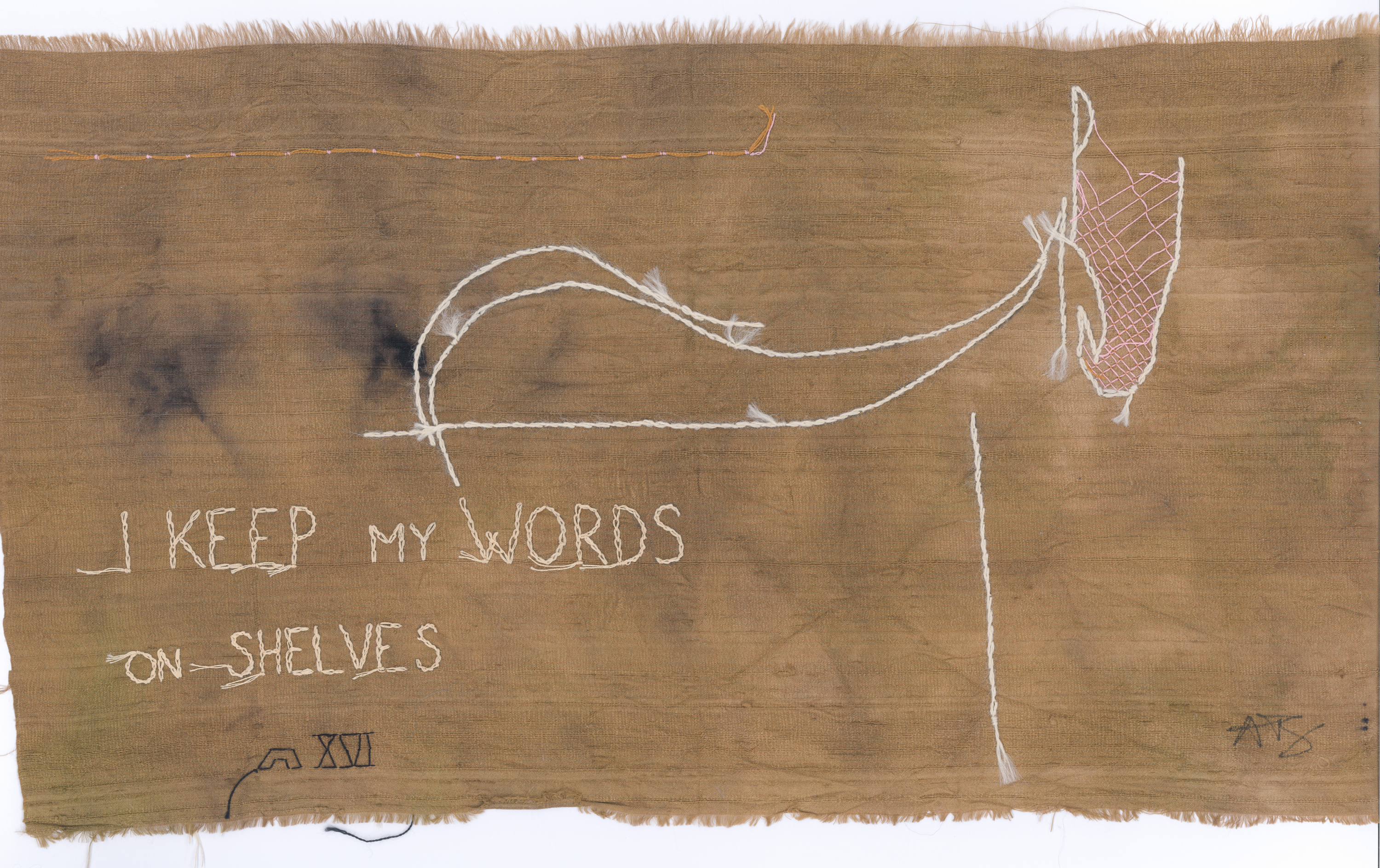
• Horse XVI: I keep my words on shelves
(430 x 255)
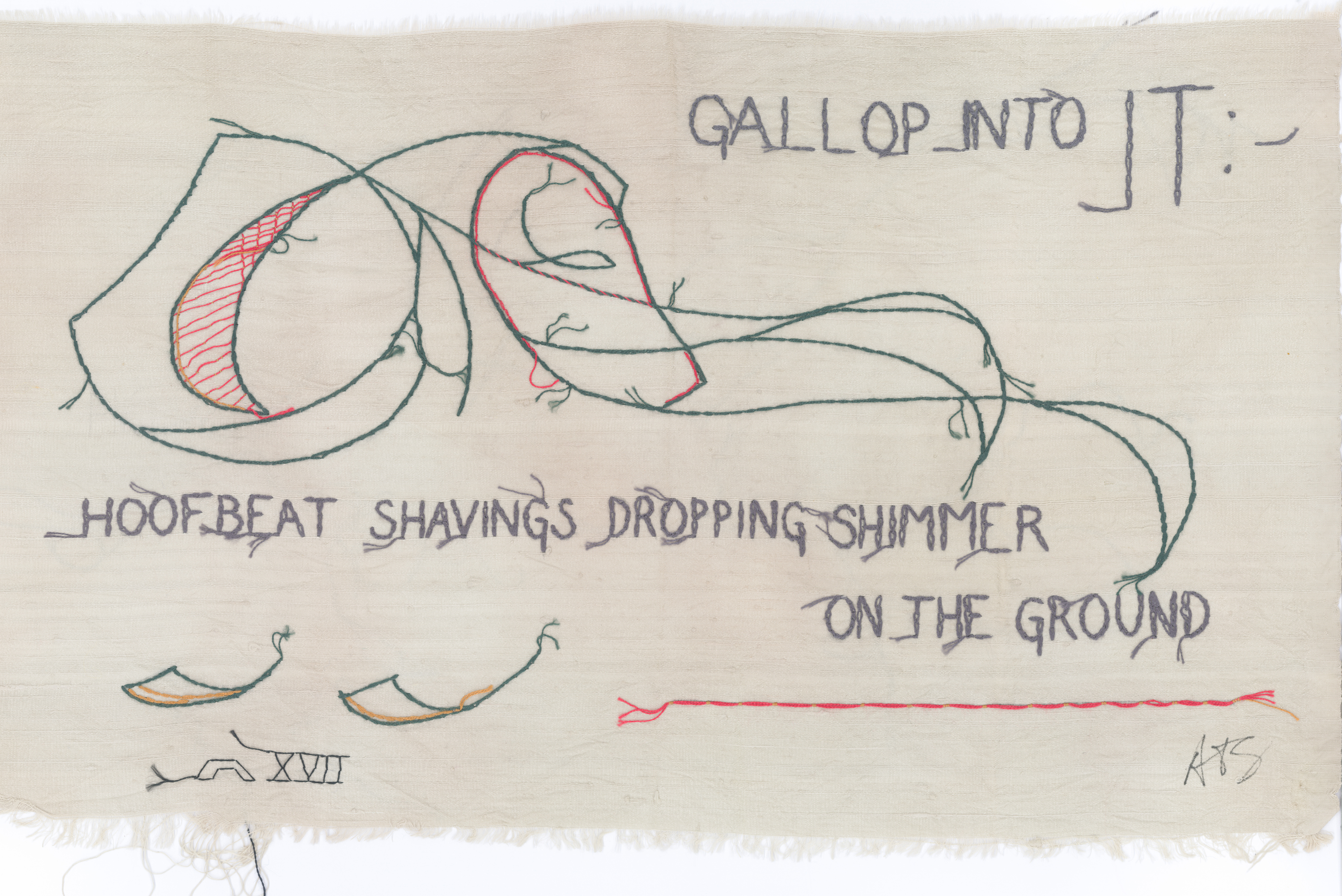
• Horse XVII: Gallop into it: Hoofbeat shavings dropping shimmer on the ground
(430 x 265)
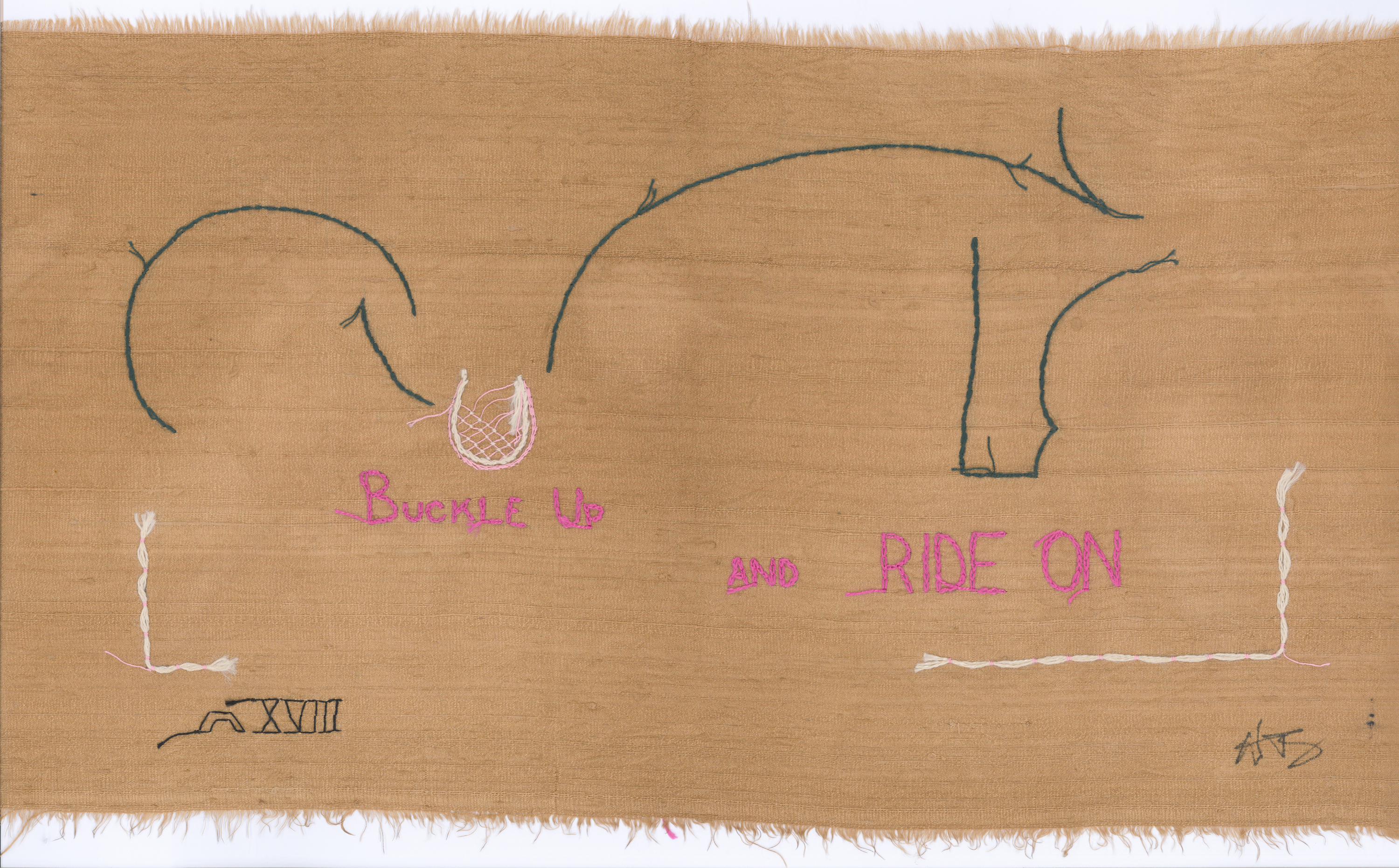
• Horse XVIII: Buckle up and ride on
(430 x 250)

• Horse XIX: I dream in perfect pitch
(430 x 270)
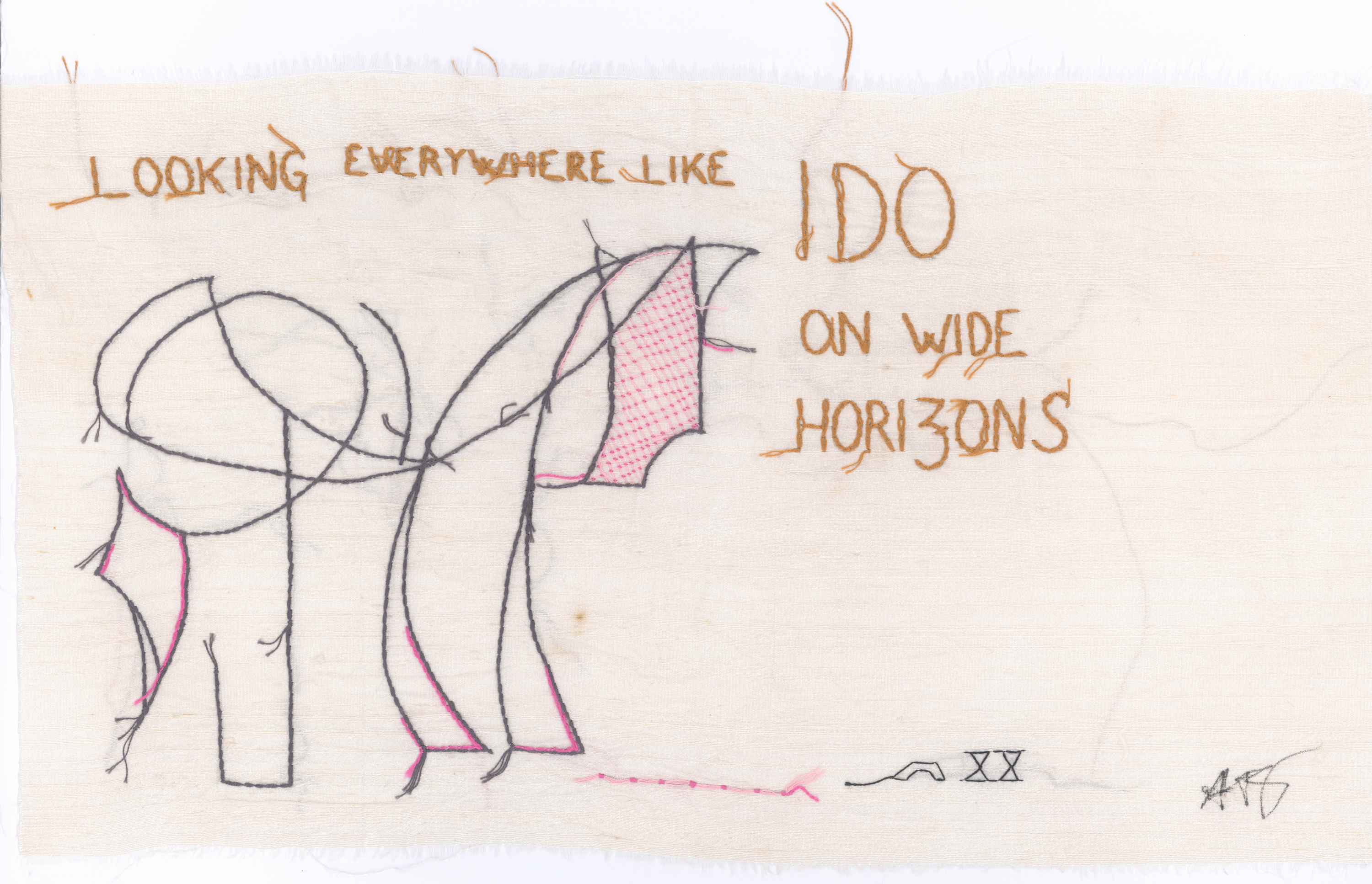
• Horse XX: Looking everywhere like I do, on wide horizons
(430 x 250)
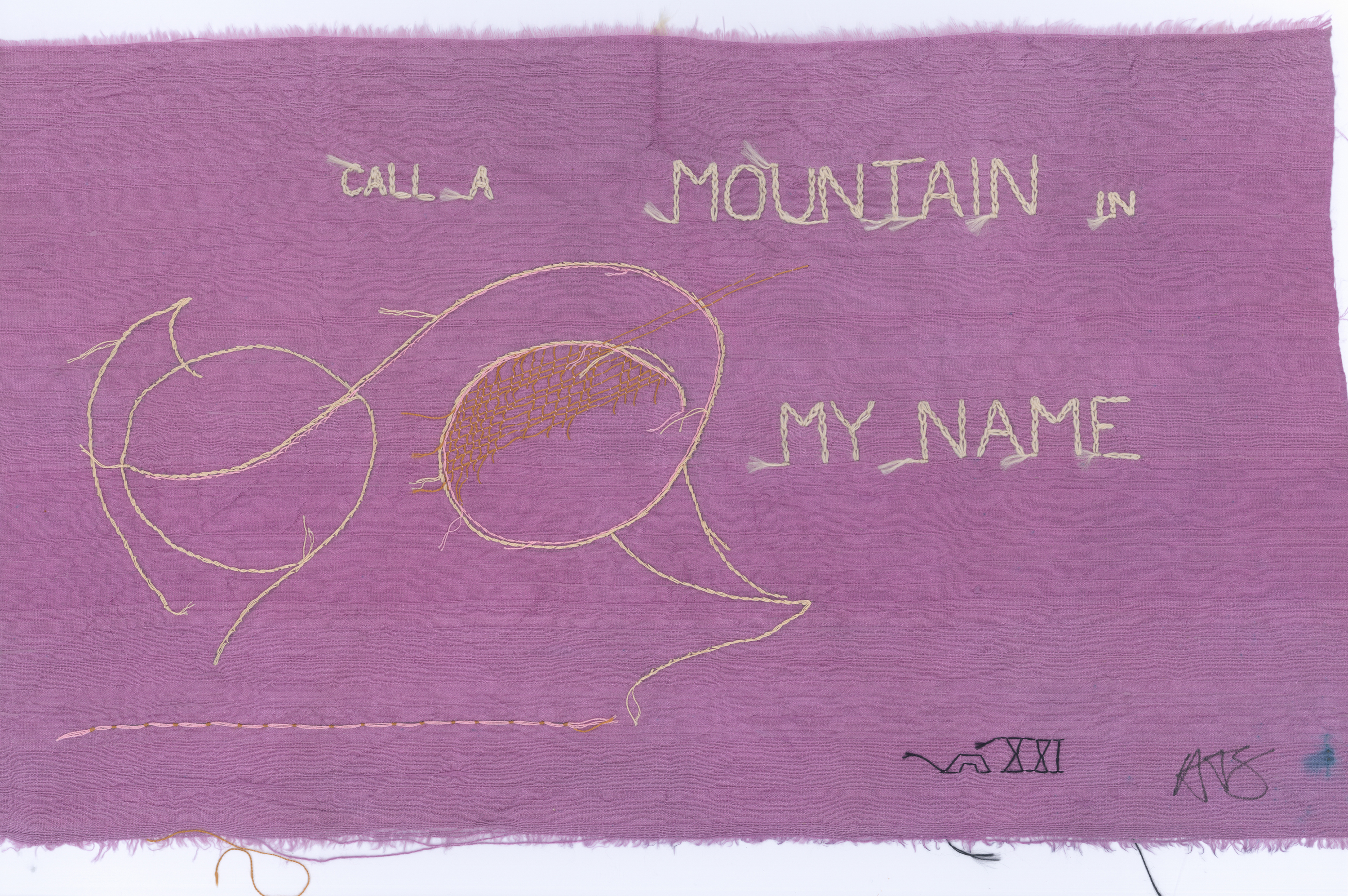
• Horse XXI: Call a mountain in my name
(430 x 260)
TWENTY-ONE HORSES
Twenty-One Horses Exhibited
2026.05.13. 21 Arklys Anima Mundi Academia (Šiauliai, Lithuania)
Curator’s Note for 21 Arklys by Zita Vilutytė
Anna Tuhus’s work “Twenty-One Horses” is a story about movement, attachment, and the ritual of daily work. In this series, embroidery acts as a measure of time and an emotional map. Her thread, measured from wrist to elbow, each silver horse amulet left behind becomes a sign that testifies to a temporary presence and an intimate agreement with place. The artist’s decision not to explain the motifs opens the works to the viewer as an open text, in which images and colors invite personal interpretations and associations.
Tuhus’s practice is based on consistency and the meaning of everyday action. Embroidery is more of a discipline than an aesthetic that structures the artist’s days, travels, and relationships. Even when time is limited, she embroiders a single thread; this act emphasizes that creation can be slow, fragmented, and yet transformative. In this way, the textile becomes a time capsule, the fabric accumulates not only layers of threads, but also memories, conversations, and overnight stays in strange homes.
The ritual dimension of “Twenty-One Horses” is essential. Leaving 21 “lucky horses” in different homes is a performative gesture with which the artist marks the stages of her journey and creates invisible connections with people and spaces. The amulets act as talismans and as material witnesses: they capture moments that would not be possible to capture with photography or text alone. This ritual also raises the question of the practice of giving and remembering: what it means to leave a part of oneself in another place and how such gestures change both the giver and the recipient.
Tuhus’s works intervene in a broader dialogue between textiles and poetry. Her work intertwines literary mood, compositional sensitivity, and material experience. Poetic impulses — Rumi readings, musical and visual inspirations — are reflected not in the direct motifs, but in the rhythm of the work, the color relationship and the sense of space. The artist’s travels through museums and craft centers, from the silk traditions of Valencia to exhibitions in New York, introduce historical and cultural layers that resonate with her personal practice.
“Twenty-One Horses” requires a space that allows the viewer to get close to the fabric, to feel the density of the thread and to see the handprint as a unit of time. The exhibition combines textile works with fragments from the artist’s poetry and travels, where the houses she lived in and the places where she left amulets are marked. Such a context strengthens the narrative layer of the series and allows the viewer to follow both the physical and emotional journey.
In the works of Anna Tuhus, intimacy and collective memory merge. Her embroideries are not only aesthetic objects, but also testimonies about transience, connections, and the power of everyday work. This series invites the viewer to stop, listen, and allow themselves to create a personal story that the fabric silently tells.
![]()
Curator’s Note for 21 Arklys by Zita Vilutytė
Anna Tuhus’s work “Twenty-One Horses” is a story about movement, attachment, and the ritual of daily work. In this series, embroidery acts as a measure of time and an emotional map. Her thread, measured from wrist to elbow, each silver horse amulet left behind becomes a sign that testifies to a temporary presence and an intimate agreement with place. The artist’s decision not to explain the motifs opens the works to the viewer as an open text, in which images and colors invite personal interpretations and associations.
Tuhus’s practice is based on consistency and the meaning of everyday action. Embroidery is more of a discipline than an aesthetic that structures the artist’s days, travels, and relationships. Even when time is limited, she embroiders a single thread; this act emphasizes that creation can be slow, fragmented, and yet transformative. In this way, the textile becomes a time capsule, the fabric accumulates not only layers of threads, but also memories, conversations, and overnight stays in strange homes.
The ritual dimension of “Twenty-One Horses” is essential. Leaving 21 “lucky horses” in different homes is a performative gesture with which the artist marks the stages of her journey and creates invisible connections with people and spaces. The amulets act as talismans and as material witnesses: they capture moments that would not be possible to capture with photography or text alone. This ritual also raises the question of the practice of giving and remembering: what it means to leave a part of oneself in another place and how such gestures change both the giver and the recipient.
Tuhus’s works intervene in a broader dialogue between textiles and poetry. Her work intertwines literary mood, compositional sensitivity, and material experience. Poetic impulses — Rumi readings, musical and visual inspirations — are reflected not in the direct motifs, but in the rhythm of the work, the color relationship and the sense of space. The artist’s travels through museums and craft centers, from the silk traditions of Valencia to exhibitions in New York, introduce historical and cultural layers that resonate with her personal practice.
“Twenty-One Horses” requires a space that allows the viewer to get close to the fabric, to feel the density of the thread and to see the handprint as a unit of time. The exhibition combines textile works with fragments from the artist’s poetry and travels, where the houses she lived in and the places where she left amulets are marked. Such a context strengthens the narrative layer of the series and allows the viewer to follow both the physical and emotional journey.
In the works of Anna Tuhus, intimacy and collective memory merge. Her embroideries are not only aesthetic objects, but also testimonies about transience, connections, and the power of everyday work. This series invites the viewer to stop, listen, and allow themselves to create a personal story that the fabric silently tells.
